

It is good to begin by reiterating that a banana is not just a regular snack but also a very healthy one. Apart from the convenience, a banana is a good source of protein. But how much protein is in a banana? The amount of protein in a banana will depend on its maturity stage (ripe or green), size, and type. So, if you’re keen on the nutritional information before taking your banana, ensure you pick the right size.
The protein content in a banana typically varies depending on size. It could be one gram or less for a whole banana while large-sized pieces will contain up to two grams. Here is a summary of how much protein to expect when consuming one banana.
Protein content of a banana
Since there are different sizes of bananas, the table below illustrates the estimated value of protein to expect from a single banana:
| Protein Content of Bananas | ||
| Smallest | < 5 inches long | 0.88 grams |
| Small | 5 – 7 inches long | 1.10 grams |
| Medium | 7 – 8 inches long | 1.29 grams |
| Large | 8 – 9 inches long | 1.48 grams |
| Larges | > 9 inches | 1.66 grams |
(Source: BananaInfo)
It is important to note that in the regular grocery stores, the bananas you find there are always large rather than small or medium-sized.
Data from the United States Department of Agriculture show that ripe bananas and raw bananas have a nearly equal amount of proteins per 100g portion.
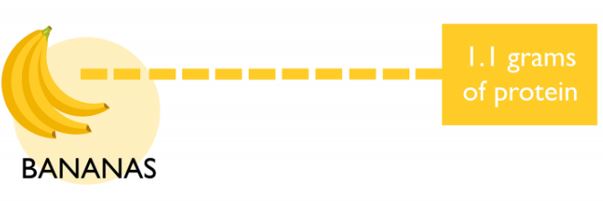
Overripe, raw bananas
- 100g = 0.73g protein
Ripe and slightly ripe bananas
- 100g = 0.74g protein
Protein in a Cup of Sliced, Mashed, and Fried Bananas
One cup of mashed bananas
- 1 Cup = 2.45 grams of protein
One cup of sliced bananas
- 1 Cup = 1.64 grams of protein
Fried bananas per 100-gram serving
- 100 grams = 2.3 grams of protein for a large banana
Based on these records on the protein content per 100g portion, one can estimate the amount in a whole bunch of bananas. If an adult needs about 46-56 grams of protein per day, you can calculate the number of bananas to eat to reach that – a lot of them. Fortunately, the fruit offers consumers more than just a few grams of proteins. The nutritional information about bananas suggests that the fruit is an awesome choice for snacking.
As much as bananas are a good source of daily protein, they are not protein-dense and should not replace your other sources of this vital nutrient.
Sources
- U.S. Department of Agriculture. Agricultural Research Service. Food Data Central. Bananas, ripe and slightly ripe, raw.
- Atlis Anarsron, Bsc, PhD. (2022) Healthline. Nutritional facts about bananas and health benefits.