

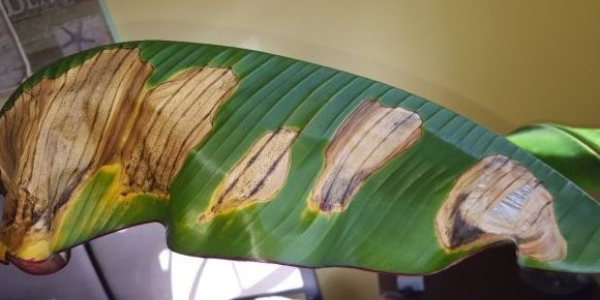
Brown spots in banana leaves may portray a plant that is ill-health. Green leaves may be the result of fungal infection or extreme change in one of the growth factors.
Black Sigatoka is a disease that is widely known to be one of the leading causes of brown leaves in bananas. This fungal disease inflicts a spot in the leaf that enlarges and spreads to other leaves. The infection has proved elusive to control. The disease has evolved to resist most control measures that have been put in place.
Apart from fungal disease, the following factors have been put forward as other reasons why banana leaves turn brown:
What Do Brown Spots on Banana Leaves Mean?
Regular leaf drop
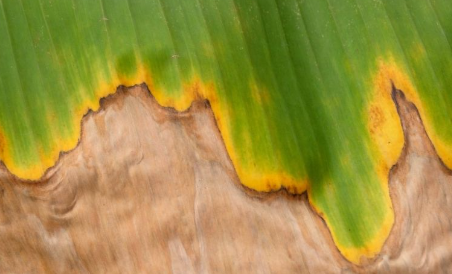
Leaves normally turn brown as they grow older and new green ones emerge. With time, the brown leaves fall off as the secondary metabolites get depleted. The fallen leaves decompose to form organic matter that boosts soil fertility.
Lack of nutrients
Too much or too little nutrients can cause banana leaves to turn brown. With little supply of nutrients, bananas cannot meet the demand for leaves. Leaves turn brown and finally fall off the plant. Too many nutrients will choke the plant making absorption difficult. This causes the plant leaves to turn brown.
Extremely high temperature
Bananas grow in the tropics where there is moderate to low temperature. High temperatures are detrimental to banana growth. Banana plants are prone to sunburn when exposed to the scorching sun. Bananas can rarely survive prolonged drought. During drought, banana leaves turn brown, crackly, and dry. The leaves eventually fall off before the entire plant becomes dry.
Cold temperature
Bananas can grow in cold temperatures. However, exposure of bananas to extreme temperatures negatively stunts their growth. The leaves turn brown and the whole plant may die.
Pests
Pets such as aphids, moths, thrips, and weevils sack the sap out of the leaves causing the appearance of brown spots.
Overwatering
Overwatering banana plants results in water stagnation. This means that the roots cannot absorb water anymore. The rots begin to rot before the entire plant becomes sullen. As roots decompose, they become browner.
Under watering
When a banana plant is supplied with insufficient water, leaves shrink and become pale. The leaves become brown as the water supply progressively reduces.
Soil ph
Bananas thrive in soil with a pH between 5-7. Soil with very high or low ph is not conducive to supporting the growth of bananas as it hinders the absorption of the nutrient. Consequently, banana leaves turn brown.
Transplant shock
A newly planted banana plant normally has its leaves turn brown. This is because of transplant shock as the new plant adjusts to the new environment.
How to control Leaf Browning
Location and height
Banana plants need indirect bright sunlight. In a darker environment, there is an increased rate of root rot. Sunlight gradually dries out the soil as well as ensures the provision of vital nutrients.
Water
Too much or too little water is affecting the growth of bananas. The main banana plant body is water retentive thus there is a need to supply sufficient water. Bananas will dry if starved of water supply.
Pests
Pests should be sprayed with pesticides before they cause banana leaves to turn brown.