

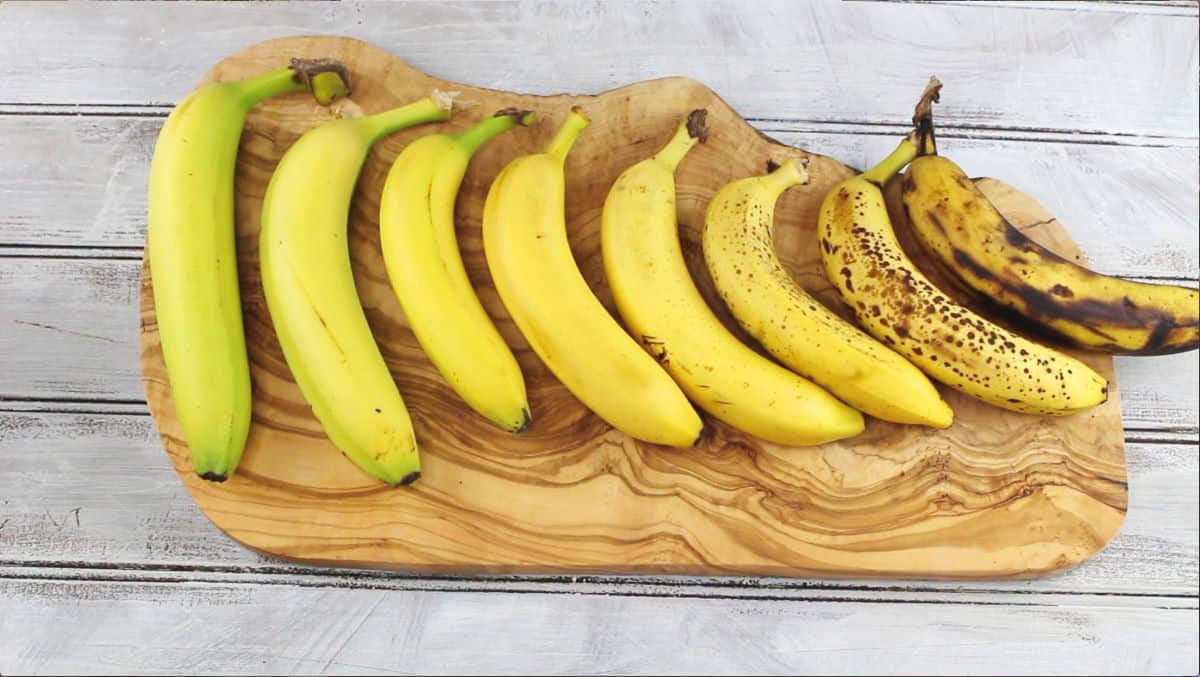
Banana fruits naturally produce ethylene gas when they are mature. Ethylene stimulates ripening in fruits. The gas is associated with a scent that emanates from ripening fruits. Ethylene breaks down starch present in bananas into sugars hence giving bananas a tender appealing outlook.
Bananas are can be classified depending on the degree of how ripe they are; under-ripe, ripe, and over-ripe. There are several suggestive indicators used to determine the level of ripeness of bananas. We will look at these suggestive indicators and help you make an informed decision when buying bananas in the grocery store or help you have a timely harvest of your banana plant.
Indicators That Your Banana Is Ripe
Color
A ripe banana is typically bright yellow without any green patches. When bananas start appearing yellow, they are supposedly sweeter than when still green. Sugar concentration in yellow bananas is higher than in green bananas. Yellow skin protects bananas from being affected by air or light that may catalyze rottenness.
Texture
Texture can tell whether a banana is ripe or not. When squeezed, a ripe banana is soft and tender. Unripe bananas have a rough or firm texture. Some bananas may appear yellow and one might perceive them to be ripe yet they are tough when squeezed. This can be due to forced ripening. Green unripe bananas are rough in texture while yellow ripe bananas are soft. A well-ripe banana should be moderately soft.
Brown Spots
Evenly distributed brown spots in a banana are an indication that the banana is ripe and ready for consumption. It is worth noting that some large black spots in the banana do not translate to actual ripeness. Some black spots in the banana are a result of bruises or too much exposure to sunlight.
Smell
In general, ripening fruits produce a sweet scent. Ethylene gas is linked with the aromatic smell as it causes the reaction of volatile compounds found in the fruits. The intensity of the aromatic smell increases as bananas become riper. Yellow color is conspicuous and attracts humans, birds, and insects that may eat the fruit while still on the farm.
Ease of Falling Off Stem
If you try plucking off an unripe banana from the stem, you will do it with struggle. A ripe banana easily falls off the stem when plucked.
Ease of Peeling Skin
When peeled, the skin should detach easily. If it proves hard to peel off the skin, then it shows that the banana was not yet mature.
A ripe banana should not leave peels in your mouth when eaten.
If your mouth is full of sticky filmy substances after eating bananas then it means that the banana is not ripe.
Quick Ways to Ripen Bananas At Home
-Cover the bananas with a paper bag or piece of cloth. This will confine ethylene gas hence speedy ripening.
-Place the bananas in a warm place. Warm temperature speeds up the reaction of aromatic compounds found in the banana hence faster ripening.
-For commercial purposes, place bananas in a room with a controlled temperature then spray ethylene gas. However, do not allow the bananas to stay for too long in the room after you have sprayed ethylene gas for they might rot.